Harry Potter and the Prisoner of Azkaban | Book Review & Movie Comparison
⚠️ Spoiler Warning
This review contains major spoilers for both Harry Potter and the Prisoner of Azkaban book and film, including important plot twists, character reveals, and the ending. If you’re experiencing Harry’s third year at Hogwarts for the first time, I highly recommend reading the book and watching the movie before continuing.
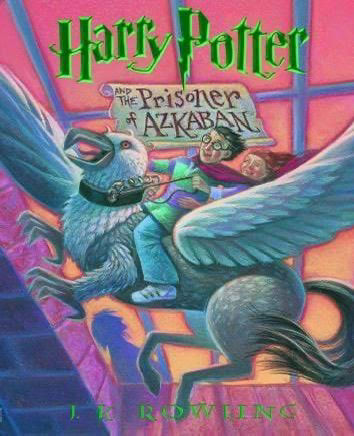
“I solemnly swear that I am up to no good.”
There are some books that remind us why we fell in love with reading in the first place.
For me, Harry Potter and the Prisoner of Azkaban is one of those books.
When I first read it years ago, I loved the mystery, the magic, and the excitement of discovering new corners of the wizarding world. But reading it again as an adult was an entirely different experience. I wasn’t just following Harry’s adventure—I found myself noticing the subtle clues, appreciating the emotional depth of the characters, and realizing just how carefully J.K. Rowling crafted every chapter.
It isn’t simply another year at Hogwarts.
It’s the moment the Harry Potter series grows up.
The first two books introduce us to magic. They welcome us into Hogwarts with floating candles, moving staircases, Quidditch matches, and chocolate frogs. While there are certainly darker moments—facing Professor Quirrell beneath Hogwarts or venturing into the Chamber of Secrets—they still carry the charm and innocence of childhood adventures.
Prisoner of Azkaban feels different from the very first page.
The danger is no longer hidden deep beneath the castle or locked behind a secret chamber. It’s out in the open. An escaped prisoner is believed to be hunting Harry Potter, Dementors patrol the school grounds, and for the first time, Hogwarts doesn’t feel completely safe.
That shift changes everything.
Instead of relying on a traditional villain, Rowling gives us uncertainty. Nearly every chapter leaves us questioning what we think we know. Who can Harry trust? Why is Sirius Black really after him? Are the adults telling Harry the whole truth?
Looking back, I think that’s one of the reasons this book has remained such a favorite among readers.
It teaches us that the truth is rarely as simple as it first appears.
Harry Is Growing Up
One of the things I appreciated most during this reread was Harry himself.
He’s still the brave, loyal boy we’ve come to know, but there’s a noticeable maturity in the way he approaches the world. He’s beginning to think for himself rather than simply accepting what adults tell him. He questions authority, wrestles with anger, and starts realizing that life isn’t divided into obvious heroes and obvious villains.
That growth begins before Harry even reaches Hogwarts.
After enduring one insult too many from Aunt Marge, Harry finally reaches his breaking point. While the magical chaos that follows is certainly memorable, what stood out to me wasn’t the humor—it was Harry finally refusing to accept the cruelty he’s lived with for so long.
For the first time, he chooses himself.
That moment sets the tone for the rest of the novel.
Harry spends much of this book searching for answers instead of waiting for someone else to provide them. Whether he’s sneaking into Hogsmeade, practicing defensive magic, or trying to understand the mystery surrounding Sirius Black, he begins taking ownership of his own story.
It’s a subtle change, but an important one.
This isn’t just the story of a boy learning magic anymore.
It’s the story of a young man beginning to discover who he wants to become.
Hogwarts Feels Like Home… and Somehow Doesn’t
One of my favorite things about every Harry Potter book is returning to Hogwarts.
No matter how many times I reread the series, arriving at the castle still feels like coming home. The Great Hall, moving staircases, cozy common rooms, Quidditch pitch, and bustling corridors never lose their magic.
But this year, something feels different.
The castle carries a quiet sense of unease.
Every student knows Sirius Black has escaped from Azkaban.
The Dementors stand guard around the school.
Teachers seem more watchful than usual.
Even Hogsmeade, normally a place of excitement, feels overshadowed by the growing danger.
Rowling somehow manages to make Hogwarts feel both familiar and completely unfamiliar at the same time.
I found myself noticing how often she uses the weather to reinforce that feeling. Storms seem heavier. The wind feels colder. The long walks across the grounds become just a little more unsettling.
It’s a small detail, but it quietly prepares us for the darker direction the series is about to take.
The Dementors: More Than Just Monsters
Every Harry Potter book introduces memorable magical creatures, but I think the Dementors are among Rowling’s most brilliant creations.
They’re terrifying without relying on claws or fangs.
Instead, they attack something much more personal.
Hope.
Every encounter with a Dementor strips away happiness until all that’s left are the worst memories a person has ever experienced.
As a younger reader, I thought they were simply frightening prison guards.
As an adult, they represent something much deeper.
Many readers have interpreted Dementors as a powerful metaphor for depression, grief, anxiety, and emotional trauma. Whether or not Rowling intended that interpretation, it’s one that resonates strongly with me.
They remind us that some battles happen entirely inside our own minds.
What I love most is that Harry doesn’t overcome them through strength alone.
He has to learn resilience.
He has to remember joy.
He has to believe that light still exists, even when darkness feels overwhelming.
That’s a lesson that reaches far beyond the pages of this book.
Professor Remus Lupin
Every time I revisit this series, Professor Lupin climbs higher on my list of favorite characters.
He isn’t flashy.
He doesn’t command attention the way Dumbledore does or possess the intimidating presence of Professor Snape.
Instead, he leads with kindness.
From his very first Defense Against the Dark Arts lesson, it’s clear that Lupin teaches differently than the professors who came before him. He doesn’t rely on fear or intimidation. He encourages curiosity, confidence, and practical learning.
His classroom becomes a place where students are allowed to make mistakes.
As someone who values compassionate leadership, I found myself appreciating Lupin even more this time around.
He sees potential in Harry long before Harry sees it in himself.
He offers guidance without demanding recognition.
Most importantly, he treats his students with dignity.
Knowing Lupin’s full story makes every interaction feel bittersweet during a reread. There are so many small moments that carry extra weight once you understand everything he’s endured.
To me, Lupin represents quiet strength.
He reminds us that kindness is never weakness and that some of the strongest people are the ones carrying burdens no one else can see.
As I closed this section of the book, I realized something.
While the mystery surrounding Sirius Black may drive the plot forward, it’s Professor Lupin who quietly becomes the heart of the story.
The People Who Shape Harry’s Third Year
As much as Harry Potter and the Prisoner of Azkaban is filled with mystery, magical creatures, and moments of danger, what makes this book truly memorable is the way it deepens the relationships at the center of the story.
At its core, this is a book about understanding people.
It’s about realizing that first impressions can be wrong.
It’s about learning that someone’s past does not always define who they are.
And perhaps most importantly, it’s about discovering that family isn’t always the one you’re born into.
Throughout this book, Harry begins to understand that the world is far more complicated than he once believed.
Hermione Granger: More Than Just the Smart One
Hermione has always been an essential part of the trio, but I think Prisoner of Azkaban is where we truly see her become the person she was always meant to be.
In the first two books, Hermione is often introduced through her intelligence. She’s the one who knows the answers, explains the rules, and finds solutions when Harry and Ron are stuck.
But this book gives us a much deeper look at her.
Hermione is still brilliant, but she is also overwhelmed, stressed, stubborn, compassionate, and incredibly brave.
One of my favorite things about this reread was realizing that Hermione’s intelligence isn’t her only strength.
Her courage is.
She is willing to stand alone when she believes something is right, even when it means upsetting her closest friends. She doesn’t always make the easiest choice, but she makes the choice she believes is necessary.
And honestly?
That is one of the most Gryffindor things about her.
The mystery surrounding Hermione’s impossible schedule is also one of the most satisfying pieces of storytelling in the entire book. Looking back, the clues are everywhere. The little moments that seem confusing at first suddenly make complete sense later.
It’s a perfect example of why rereading Harry Potter is such a special experience.
You aren’t just remembering the story.
You’re discovering it all over again.
Ron Weasley: The Heart of the Friendship
While Hermione often receives praise for her intelligence and Harry for his bravery, I think Ron’s importance is sometimes overlooked.
Ron is the emotional center of the trio.
He brings humor when things become too serious.
He reminds Harry that friendship doesn’t have to be complicated.
He is the person who treats Harry like Harry—not like “The Boy Who Lived.”
One thing I appreciated during this reread was seeing how much Ron contributes even when he doesn’t always feel confident.
He isn’t the top student.
He isn’t the chosen one.
He doesn’t always have the perfect answer.
But he shows up.
Again and again.
And that loyalty is what makes Ron such an important part of Harry’s journey.
The trio works because each person brings something different.
Harry brings courage.
Hermione brings knowledge.
Ron brings heart.
Together, they are stronger than they could ever be alone.
Hagrid, Buckbeak, and Learning Compassion
One storyline that stood out to me more during this reread was Hagrid’s relationship with Buckbeak.
Hagrid has always been one of the most lovable characters in the series. His kindness, loyalty, and ability to see the good in misunderstood creatures are some of his greatest qualities.
Unfortunately, those same qualities sometimes put him in difficult situations.
Buckbeak’s story is heartbreaking because it highlights one of the biggest themes in the series:
Fear often comes from misunderstanding.
Buckbeak isn’t dangerous because he wants to hurt people. Like many creatures in the wizarding world, he requires patience, respect, and understanding.
Watching Hagrid fight for him reminded me why Hagrid is such an important character.
He sees value in things others overlook.
He protects creatures that others dismiss.
He gives second chances.
And honestly, the wizarding world needs more people like Hagrid.
Sirius Black: The Villain We Were Told to Fear
One of the reasons Prisoner of Azkaban works so well as a mystery is because Rowling allows us to experience the story from Harry’s perspective.
We believe what Harry believes.
We fear what Harry fears.
And for most of the book, Sirius Black represents the ultimate threat.
An escaped prisoner.
A supposed traitor.
Someone who betrayed Harry’s parents.
Someone who wants to find Harry.
But the brilliance of this story is that it forces us to question everything.
The truth about Sirius Black changes the entire emotional foundation of the series.
Suddenly, the story isn’t about a dangerous criminal hunting Harry.
It’s about a man who lost everything.
It’s about friendship.
It’s about betrayal.
It’s about the damage caused when the truth is buried beneath rumors and assumptions.
Sirius’ introduction also gives Harry something he has been missing his entire life:
The possibility of family.
For years, Harry has wondered what it would be like to have parents who loved him. He has spent his childhood feeling like an outsider, never truly belonging anywhere.
The idea that someone connected to his parents could care about him changes everything.
Sirius represents hope.
Not just for Harry, but for the possibility that the lonely life he has always known doesn’t have to be his future.
Peter Pettigrew and the Danger of Cowardice
One of the strongest messages in this book is that evil does not always look the way we expect.
Sometimes it isn’t loud.
Sometimes it isn’t powerful.
Sometimes it’s someone who chooses the easiest path when things become difficult.
Peter Pettigrew’s role in the story is one of the most interesting examples of this.
Without going into every detail of his character, what stands out is the way this book explores the consequences of choices.
Bravery is not simply about facing danger.
Sometimes bravery is about doing the right thing when no one is watching.
And sometimes the greatest failures come from people who choose comfort over courage.
This idea becomes increasingly important as the series continues.
The Mystery That Makes This Book Special
What makes Prisoner of Azkaban such a satisfying read is that the mystery feels earned.
Nothing happens by accident.
Small details that seem insignificant early on become incredibly important later.
Characters’ actions have consequences.
Past decisions continue affecting the present.
The story constantly reminds us that history matters.
The magical world doesn’t exist in isolation.
The choices people made years ago are still shaping Harry’s life today.
And that is what makes this book such an important turning point in the series.
Harry isn’t just fighting a new problem.
He’s uncovering the story that existed before him.
Themes That Stand Out
Looking back at this book as an adult, several themes stood out to me more than they did when I was younger.
The Importance of Perspective
We are reminded that stories can change depending on who tells them.
The version of events Harry believes at the beginning is not the full picture.
The truth requires patience, understanding, and a willingness to look deeper.
The Power of Friendship
Once again, Harry’s greatest strength isn’t a spell or magical ability.
It’s the people beside him.
His friendships help him survive moments he never could have faced alone.
The Importance of Hope
Despite the darkness surrounding this story, hope is everywhere.
Hope that people can change.
Hope that the truth can come out.
Hope that even after terrible loss, life can still hold moments of happiness.
And that may be the biggest reason this book continues to resonate with readers.
Because beneath all the magic, it is still a story about very human experiences.
Fear.
Love.
Loss.
Friendship.
And finding light when things feel impossible.
As Harry’s third year at Hogwarts comes to an end, the wizarding world feels larger than ever before.
But more importantly…
Harry’s understanding of that world has completely changed.
Book vs. Movie: Did the Film Capture the Magic?
As Harry’s third year at Hogwarts comes to a close, one thing becomes very clear: Harry Potter and the Prisoner of Azkaban is where the series begins to transform.
The story becomes more complex.
The characters become more layered.
The world becomes darker.
And that transformation is something the film adaptation captures beautifully.
Watching the movie after finishing the book reminded me why Prisoner of Azkaban is often considered one of the strongest films in the franchise. It has a distinct atmosphere, a more mature tone, and a visual style that makes it feel completely different from the first two movies.
But like every adaptation, choices had to be made.
A book gives us hundreds of pages to explore thoughts, emotions, history, and small details. A movie has to tell that same story within a limited amount of time.
And because of that, some of the magic from the pages doesn’t always make it onto the screen.
So the question becomes:
Did the movie capture the magic?
My answer is yes.
But the book captured the heart.
The Movie’s Darker, More Mature Atmosphere
Before discussing what the movie changed, I want to talk about what it got absolutely right.
The tone.
Director Alfonso Cuarón brought something completely new to the Harry Potter films.
The first two movies have a wonderful sense of childhood wonder. They feel bright, exciting, and full of discovery.
Prisoner of Azkaban feels older.
Hogwarts feels ancient.
The grounds feel more mysterious.
The world feels less like a fantasy playground and more like a real place with history, secrets, and shadows.
The changing seasons, the overgrown landscapes, the moving camera shots, and the overall visual style create an atmosphere that perfectly matches Harry’s emotional journey.
The movie understands something important:
Harry is growing up, and the world around him is changing with him.
The cinematography is one of the biggest strengths of this adaptation. Even small moments—walking through the castle, traveling across the grounds, or seeing the magical creatures—feel more immersive.
It feels like we are not just watching Harry’s story.
We are stepping into it.
The Marauders: The Biggest Missing Piece
If there is one thing I wish the movie had explored more, it would be the story of the Marauders.
This is arguably one of the most important pieces of Harry’s family history, and the book gives readers a much deeper understanding of it.
The Marauders are more than just the creators of a magical map.
They represent a previous generation of Hogwarts.
A group of friends.
A story of loyalty, mistakes, betrayal, and consequences.
Their history connects Harry to his parents in a way that feels incredibly personal.
The movie gives us pieces of this story, but it moves through the reveal quickly.
For readers who know the full story, the emotional impact is still there.
But for someone experiencing the movie alone, some of that significance is missing.
This is one of those moments where the book reminds us that Harry isn’t just discovering magic.
He’s discovering the people who came before him.
Professor Lupin: A Wonderful Performance With Less Time
One thing the movie absolutely succeeded at was casting Remus Lupin.
David Thewlis captures so much of what makes Lupin special.
His kindness.
His patience.
His quiet sadness.
His ability to make students feel safe.
However, the book allows us to spend much more time understanding why Lupin becomes such an important figure for Harry.
The novel gives more room for his teaching style, his relationship with Harry, and the emotional weight of his personal story.
The movie shows us who Lupin is.
The book helps us understand him.
And that difference matters.
Because Lupin is not important simply because of what he teaches.
He is important because of the compassion he shows.
Hermione and the Time-Turner
One of my favorite mysteries in the book is Hermione’s impossible schedule.
Throughout the story, readers are left wondering how she can possibly be everywhere at once.
The book lets that mystery build.
The movie, understandably, has less time to explore the confusion surrounding it.
The reveal still works, but it doesn’t have quite the same buildup.
This is a great example of something that happens often when books become movies.
The major events remain.
The emotional journey sometimes gets shortened.
In the book, we experience the mystery alongside Harry and Ron.
In the movie, we mostly experience the solution.
Both versions work, but they create very different experiences.
Justice for Crookshanks
I have to say it:
Crookshanks deserved more screen time.
In the movie, Hermione’s cat is memorable and adorable in his own way.
But the book gives him a much bigger role.
Crookshanks is intelligent, observant, and far more important to the mystery than many readers realize at first.
During a reread, I appreciated him even more because so many of his actions make sense once you understand what is happening.
He’s not simply an unusual-looking cat.
He’s a tiny detective with excellent instincts.
Honestly, Crookshanks deserves his own spin-off.
The Firebolt Difference
Another interesting change between the book and movie is Harry’s Firebolt.
In the film, the Firebolt appears near the end as a final magical surprise.
In the book, it plays a larger role throughout the story.
This difference changes several character moments, especially involving Harry, Ron, and Hermione.
The book uses the Firebolt as more than just a broom.
It becomes part of the larger story about trust, safety, and Hermione’s willingness to make difficult choices.
It also highlights something important about Hermione:
She isn’t trying to ruin anyone’s fun.
She is trying to protect her friends.
Even when they don’t understand her reasons.
The Shrieking Shack: Book vs. Movie
The Shrieking Shack sequence is one of the strongest moments in both versions.
The movie does an excellent job creating tension.
The performances are emotional.
The atmosphere is intense.
The revelations feel powerful.
However, the book gives these moments more space.
Readers get more explanation.
More history.
More understanding of why each character made the choices they did.
The biggest difference between the book and movie throughout this story is not necessarily what happens.
It’s how much time we have to process why it happens.
The book lets us sit with the emotions.
The movie lets us experience the moment.
Both are valuable.
They simply tell the story differently.
What the Movie Added
While there are moments I wish had been included, there are also choices the movie made that I absolutely love.
The visual storytelling is incredible.
The use of the seasons mirrors Harry’s emotional journey.
The darker color palette matches the story’s themes.
The performances bring beloved characters to life in unforgettable ways.
The movie also creates a stronger feeling that Hogwarts itself is alive.
Every hallway, classroom, and landscape feels like it has a story.
It understands that the setting is just as important as the characters.
Final Thoughts on the Adaptation
After comparing the two versions, I don’t think this is a case of one being “good” and the other being “bad.”
They simply offer different experiences.
The movie captures the feeling of Prisoner of Azkaban.
It captures the mystery.
The darkness.
The magic.
The transition into a more mature chapter of Harry’s story.
But the book captures the details that make the story unforgettable.
The relationships.
The history.
The emotional connections.
The little moments that make Hogwarts feel like home.
For me, the book wins this particular case.
Not because the movie failed.
Because the book gave us more time with a story that deserved every page.
Final Thoughts: Why Prisoner of Azkaban Still Holds Its Magic
After closing the book, watching the movie, and spending time reflecting on everything that makes Harry Potter and the Prisoner of Azkaban so memorable, I keep coming back to the same thought:
This is the book where Harry Potter truly becomes the story we know and love.
The magic is still there.
The wonder is still there.
But now there is something deeper.
This book understands that growing up means realizing the world is not always simple.
The people we admire can have flaws.
The people we fear may not be who we think they are.
The truth can be complicated.
And sometimes the hardest battles are not fought with a wand—they are fought with understanding, forgiveness, and the courage to face things we don’t want to see.
That is what makes Prisoner of Azkaban such a powerful part of Harry’s journey.
It isn’t just about defeating a threat.
It’s about discovering the truth.
Favorite Character: Remus Lupin
While there are so many incredible characters in this story, Professor Lupin remains the character who stood out to me the most during this reread.
There is something incredibly special about characters who don’t need to be the loudest person in the room to make an impact.
Lupin leads through compassion.
He teaches through patience.
He supports others because he understands what it feels like to struggle.
One of my favorite things about rereading Harry Potter as an adult is realizing that some of the most important characters are not always the ones holding the spotlight.
Sometimes they’re the ones quietly helping others find their way.
Lupin represents that perfectly.
He reminds Harry that his past does not have to define him, and that there is strength in continuing forward even after experiencing loss.
Favorite Trio Moment: Friendship Through the Hard Times
One of the reasons the Harry Potter series continues to resonate with so many readers is because the magic is never the only important part.
The friendships are.
Harry, Ron, and Hermione are not perfect.
They disagree.
They make mistakes.
They misunderstand each other.
But when it matters most, they show up.
That is what makes their friendship feel real.
They are not friends because everything is easy.
They are friends because they choose each other even when things are difficult.
And honestly, that may be one of the biggest lessons this series teaches.
The people who stand beside you during your hardest moments are often the people who matter most.
Favorite Magical Addition: The Marauder’s Map
Every Harry Potter book introduces something new that makes the wizarding world feel even larger, but the Marauder’s Map is one of the most memorable magical objects in the entire series.
It is clever.
It is mysterious.
It is mischievous.
But what makes it special is the history behind it.
It isn’t just a magical tool.
It is a piece of Hogwarts’ past.
It connects generations of students, friendships, and choices.
It reminds us that Hogwarts existed long before Harry arrived and that every generation leaves something behind.
Favorite Theme: The Truth Is More Complicated Than We Think
If I had to choose the biggest theme of Prisoner of Azkaban, it would be this:
People are complicated.
This book challenges the idea that someone is either completely good or completely bad.
It asks us to look deeper.
To question what we hear.
To understand before judging.
That lesson becomes more important with every book that follows, but this is where the series really begins exploring it.
Favorite Reread Discovery
One of my favorite parts of rereading this book was noticing all the little details that I missed the first time.
That is the beauty of returning to a story you love.
You are not the same person you were when you first read it.
You notice different things.
You connect with different characters.
You understand different emotions.
As a younger reader, I was focused on the mystery.
As an adult reader, I found myself focusing more on the people.
The grief.
The choices.
The relationships.
The moments between the big events.
And that made this reread feel completely new.
Final Ratings
📖 Book Rating: ⭐⭐⭐⭐⭐ (5/5)
There was never really any question about this one.
Harry Potter and the Prisoner of Azkaban remains one of the strongest books in the series because it balances everything that makes Harry Potter special.
The mystery is engaging.
The characters are unforgettable.
The emotional moments feel earned.
The world expands beautifully.
And every reread reveals something new.
🎬 Movie Rating: ⭐⭐⭐⭐½ (4.5/5)
The film adaptation is absolutely stunning.
The atmosphere, performances, music, and visual storytelling make it one of the strongest movies in the franchise.
While I wish certain details from the book had received more attention, the movie successfully captures the feeling of Harry’s third year at Hogwarts.
It feels like a turning point.
And it looks like one too.
The Pensieve Verdict ⚖️
Case Closed.
Harry Potter and the Prisoner of Azkaban is where the series truly finds its voice.
The first two books introduced us to the magic.
This book shows us the meaning behind it.
It reminds us that courage is not always about fighting.
Sometimes courage is questioning what you have been told.
Sometimes it is forgiving someone.
Sometimes it is allowing yourself to hope after experiencing loss.
This story takes everything we loved about the first two books and expands it into something deeper, more emotional, and more mature.
The movie captures the atmosphere.
The book captures the heart.
And after revisiting both, I understand even more why this story has remained beloved by generations of readers.
There is a reason we continue returning to Hogwarts.
There is a reason these characters feel like old friends.
There is a reason, even after all these years, we still believe in a little bit of magic.
Until the next chapter…
✨ Mischief managed.


Comments